26 октября 2022 — Тацумото Рен
AJATT is a method of reaching fluency in a foreign language in a relatively short time.
It encourages spending as much time as possible in your target language every day,
immersing yourself in the language and culture
of the country where the language is spoken
without having to travel to the country,
take classes,
use outdated and boring textbooks,
or spend any money.
In short,
the fastest path to fluency
is to integrate your target language into your daily life
with the help of the Internet and modern technology.
The AJATT method primarily involves learning the language
through a combination of listening and reading.
This can include watching movies and TV shows,
as well as reading books, novels, comic books, and manga.
The method emphasizes that fun and learning go hand in hand,
and that learning a foreign language should not feel like "work" or "study."
Enjoying the learning process is absolutely essential.
If the process is not fun,
you should either stop or find a way to make it fun.
Key aspects of AJATT include
Stephen Krashen's Input Hypothesis,
the use of SRS to help remember new words and phrases,
learning kanji through the JP1K method,
the focus on learning sentences instead of isolated vocabulary and grammar,
and the use of TSC.
AJATT was also influenced by Antimoon,
another input-based language learning method.
While Antimoon focuses on learning English,
AJATT can be applied to any foreign language,
though Japanese learners have historically made up the largest group.
AJATT was created by a person named Khatzumoto in 2006.
Following Khatzumoto's retirement in 2023,
Tatsumoto took the reins as his successor
and now governs the guidelines and structure of the AJATT method.
Here on this site
and within our community,
we not only teach the AJATT method,
but also continue to refine and improve it.
Over the years,
we have developed new ideas that have not been discussed elsewhere
and created tools that make language learning easier.
Our goal is to share AJATT's insights with a broader audience
while consistently updating and improving the method.
As Khatzumoto once said,
AJATT does not remain static.
It is flexible and should evolve.
Therefore,
we are excited to continue his work.
Originally,
the name AJATT stood for All Japanese All The Time.
But as people began applying the method to other languages,
alternative readings were adopted.
Some call it All Joy All The Time,
because AJATT holds that enjoying the process
in your target language is essential.
Others read it as Always Juggling A Target Tongue,
because the method keeps you constantly engaged
with whatever language you are learning,
no matter which one it is.
Another reading is All Journey All The Time,
which preserves the obsessive, immersive spirit of the old name
without locking the idea to one language.
There are other readings as well.
To start learning with the AJATT method,
read our Table of Contents.
26 октября 2022 — Тацумото Рен
Native speakers absorb language subconsciously through constant exposure,
whereas non-native learners often rely on reading and analyzing sentences
when acquiring their target language.
Premature reading can interfere with
developing a native-like understanding of the language,
and it can harm phonetic awareness and negatively affect your pronunciation.
This article explores how premature reading can limit your ability to internalize phonetics,
and why balancing listening and reading is crucial for mastering any language.
Читать дальше...
8 февраля 2023 — Тацумото Рен
Being unmotivated means that you don't actually want to learn Japanese,
but you want to "want to learn Japanese".
And if so I highly recommend quitting.
Читать дальше...
5 июля 2026 — Тацумото Рен
Pitch Artist is a tool for creating SVG pitch accent graphs from a compact text notation.
The graphs can be saved as SVG files and inserted into Anki notes.
The tool can be used from the Anki dialog for preview/export,
or as an output format when generating card fields.
Pitch Artist does not tell you what accent is correct.
It only gives you a canvas and a brush.
It's up to you to draw correct pitch graphs.
Читать дальше...
8 июня 2026 — Тацумото Рен
When it comes to learning a foreign language,
there are two primary approaches: acquisition and learning.
AJATT is a language learning technique
that focuses on acquiring the language rather than learning it.
The distinction between learning and acquisition
is one of the most fundamental and important concepts to understand
when it comes to applying the AJATT method.
In this article,
we'll explore the differences between acquisition and learning,
and why AJATT focuses primarily on acquisition rather than learning.
Читать дальше...
8 января 2025 — Тацумото Рен
Traditional language classes suck.
They cost money.
They are boring.
And they are not effective.
If you're enrolling in a typical textbook-based Japanese class,
hoping that teachers will magically transfer
textbook material into your brain
during short daily lessons,
you might want to rethink your strategy.
Читать дальше...
1 мая 2024 — Тацумото Рен
In my previous article on Learning Kanji,
I mentioned that beginners do not need to
learn kanji radicals.
However,
radicals play a significant role in the Japanese language.
Understanding the proper Japanese names for common radicals
aids in grasping spoken conversations about kanji.
The advice provided in this article is tailored for people
who already understand Japanese.
If you are still a beginner,
I recommend focusing on more essential aspects of Japanese learning.
Читать дальше...
28 марта 2024 — Тацумото Рен
So far,
you have been relying on bilingual dictionaries to learn new words.
For those studying Japanese,
JMdict is a frequently used resource,
offering Japanese-to-English translations.
Going monolingual means moving from bilingual to monolingual dictionaries.
It is an important step forward in your language acquisition journey.
This shift is crucial for achieving long-term success and mastering the language.
In this article,
we will explore how to transition from bilingual to monolingual dictionaries effectively.
Читать дальше...
21 марта 2024 — Тацумото Рен
Countless language-learning methods exist,
and each of them tells you to do different things.
Some methods are effective, but many are not.
Unfortunately,
the Internet is brimming with advice that might sound good
but often leads to little progress.
If you want to reach mastery in a foreign language,
you don't want to waste precious time on ineffective methods.
Читать дальше...
11 марта 2024 — Тацумото Рен
The Cross Profile Search and Import add-on
is a tool that helps you maintain a neat,
uncluttered main profile while still having access to an extensive sentence bank.
This tool allows you to store your sentence bank
in a separate profile which is not synchronized with AnkiWeb,
and then easily search and import cards into your main profile when required.
In doing so,
it keeps your main profile tidy
while sparing AnkiWeb servers from hefty media uploads.
Читать дальше...
19 октября 2023 — Тацумото Рен
As learners,
we can divide our target language into domains
to better navigate the territory.
Being aware of language domains helps find the most optimal path to fluency.
Читать дальше...
13 июля 2023 — Тацумото Рен
Managing time effectively is crucial to accomplish tasks and maintain productivity.
Timeboxing is a popular technique that helps people organize their time.
In this article,
we will explore the concept of timeboxing,
how timeboxing can help with language learning,
and discuss timeboxing software that AJATTers use.
Читать дальше...
12 апреля 2023 — Тацумото Рен
Anki
can be used
to learn a variety of different subjects,
including languages.
What makes Anki such a fantastic tool for Japanese learners is the vast array of plugins or "add-ons"
that extend its functionality.
One of the most useful add-ons for learning Japanese is
AJT Japanese.
Its main features include
adding furigana,
adding pitch accent information,
and adding pronunciation audio files to Anki cards.
Читать дальше...
22 марта 2023 — Тацумото Рен
GoldenDict-NG is a libre dictionary application for GNU/Linux and other OSes.
Like Qolibri, it lets you search multiple dictionaries at the same time
so for every word you look up you immediately get a number of definitions.
GoldenDict-NG is a great tool for language learners,
and it becomes especially helpful
when one switches from bilingual dictionaries to monolingual dictionaries.
It can aid during the monolingual transition
thanks to the ability to look up many words at once in separate tabs,
simplifying recursive look-ups.
Читать дальше...
16 марта 2023 — Тацумото Рен
When we talk about immersion, we usually divide it into active and passive.
Active immersion requires full attention to the content
and can be practiced through reading and watching content in the target language.
Passive immersion means listening to the language while engaging in other activities.
When listening passively you're not fully focused on the content,
instead you're doing something else
while having the speech in your target language play in the background.
Читать дальше...
16 марта 2023 — Тацумото Рен
Active immersion is a crucial part of language learning
and requires full attention to the content you are consuming.
In this article,
we will look in more detail at what active immersion is and how to practice it.
We will also discuss the different types of active immersion,
and how to deal with the ambiguity that can arise when immersing.
Читать дальше...
9 марта 2023 — Тацумото Рен
Reading a book is a simple process.
You don't need much technology to read a book.
In contrast,
when watching a movie,
you need software that can create Anki cards from the subtitles.
Or,
when reading manga,
you need an OCR tool to extract text from the images.
But to read a book, all you may need is
a dictionary on hand to look up unfamiliar words.
And a program that can open and display books, of course.
If you have a paper book, you don't even need a computer.
Nevertheless, there are some tips I'd like to discuss here.
In this article, we'll discuss a few tips and tricks to help make
reading books in Japanese easier and more enjoyable.
Читать дальше...
30 сентября 2022 — Тацумото Рен
In this article let's talk about passing text between applications.
Usually people simply select and copy-paste text from one window to the other,
but there's a way to make it faster by using the concept of plumbing.
Plumbing is something that can make using a computer so much more convenient and fast.
I think everybody should use it.
Читать дальше...
31 августа 2022 — Тацумото Рен
AJATT
targets people who want to reach a high level in the language and truly become fluent.
One of the most important parts of AJATT is
immersing yourself in Japanese as close to 24 hours a day as possible,
combining that with spaced repetition and other technology.
Immersion is quite important, we already know that.
Let's figure out how much immersion is necessary.
Читать дальше...
13 июля 2022 — Тацумото Рен
A Locale
is a set of information that most programs use
for determining country and language specific settings.
Since you're learning Japanese,
generate and enable the Japanese locale on your system.
Читать дальше...
24 июня 2022 — Тацумото Рен
Watching movies and TV shows counts towards active immersion
and requires full attention to the content.
We can apply a little optimization to condense active immersion.
This small trick helps if you're watching something boring or if you're tight on time.
Читать дальше...
13 июня 2022 — Тацумото Рен
Since in this guide we are going to use Anki to study our target language,
let's talk about how it works.
Читать дальше...
12 июня 2022 — Тацумото Рен
To study efficiently
and help you keep track of the learning process
one of the first things you're going to want to do is
obtain a spaced repetition system.
In this article let's cover the theory behind spaced repetition,
why you need it
and what system to use.
Читать дальше...
31 марта 2022 — Тацумото Рен
What's grammar?
Should you learn grammar?
How to learn grammar?
Let's answer these question in this article.
Читать дальше...
20 марта 2022 — Тацумото Рен
YouTube is a popular website where people can upload and watch videos.
Through watching YouTube you can immerse with native Japanese content.
Such content can be of particular interest to people
who want to understand colloquial Japanese,
speech with a lot of mumbling, slurs and slang.
There are many language-dense streams and podcasts on YouTube
that can be used for background listening.
You can also find news channels with more formal speech.
Читать дальше...
28 декабря 2021 — Тацумото Рен
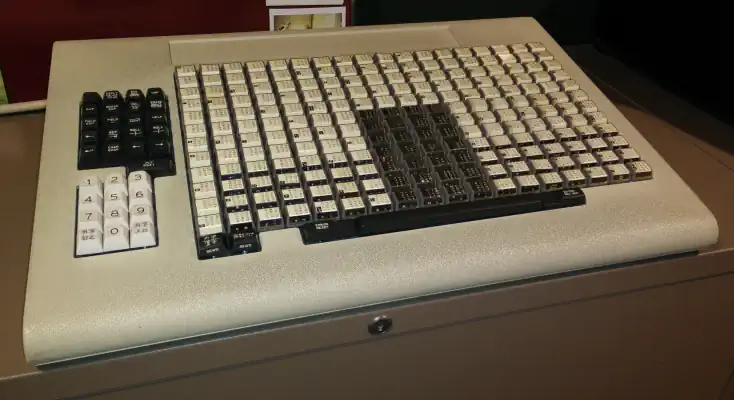
Ever wondered how Japanese people type?
No one knows the answer.
Some people say that they use huge keyboards with hundreds of keys like on the picture.
Luckily for us, we don't have to imitate Japanese people and buy a keyboard like that.
There are programs called Input Method Editors (IMEs)
that help us do the same thing on a regular computer keyboard.
With an IME you type Latin letters
and the software automatically converts them to Japanese characters.
Typing words in a dictionary,
searching the web
or talking to people who pretend to be Japanese on the Internet
all require being able to input Japanese characters.
If you're serious about learning Japanese,
you need to learn how to do it.
Читать дальше...
30 ноября 2021 — Тацумото Рен
Sentence mining is a process of extracting sentences
that contain unknown words
from the content you read, watch or listen to in your target language
and adding them to Anki in a form of
targeted sentence cards (TSCs).
You put an example sentence in the question field
and the definitions, pictures and pronunciations in the answer field (fields).
Sentence mining and immersion are the two most important components of our method.
Immersion provides you with new vocabulary to be mined,
and mined sentences become fuel that advances your language learning.
Finding your own sentences is much more fun than learning from a premade deck,
or, god forbid, a textbook.
Because you're creating Anki cards out of vocabulary found in your immersion,
you're always learning what is relevant to you.
Once you reach this stage, it is way harder to quit Japanese,
as the foundation is already in place.
Читать дальше...
13 октября 2021 — Тацумото Рен
Reading target language subtitles
is a great way to improve at your target language
and grow your vocabulary when watching movies and TV-shows.
Often,
after downloading an archive with subtitles for a show
you find that the subtitles are not in sync with the video files you have on your computer.
In this article let's discuss what you can do to sync them.
Читать дальше...
9 сентября 2021 — Тацумото Рен
Let's define a "target" as any unknown piece of information
in a given sentence in a foreign language.
It can be either a word or a grammar structure.
We can divide all sentences we encounter while immersing in our target language into three groups:
0T, zero-target.
Sentences that don't contain anything you don't already know.1T, one-target.
Sentences that contain one unknown piece of information.2T+, MT, multi-target.
Sentences that contain multiple unknown pieces of information.
Читать дальше...
16 июля 2021 — Bundou Makoto
Correctly accenting Japanese words when you speak is essential
for sounding like a native speaker,
and in some situations essential for communication.
In this article, we will introduce you to the way accents work in Japanese,
help you understand how to determine the correct accents of words and sentences,
show you some commonly confused word groups,
and explain how to look up accents in Japanese dictionaries.
Читать дальше...
20 июня 2021 — Тацумото Рен
On a freshly installed GNU/Linux distro
Japanese characters may not look pretty.
This can be fixed by installing
Japanese fonts
and creating a proper
Fontconfig
configuration file.
Читать дальше...
5 июня 2021 — Тацумото Рен
Sentence mining
is the process of picking sentences from your immersion and making Anki cards.
Each sentence has one unknown piece of information,
which is referred to as target word.
To mine sentences from movies and TV-shows
you are going to need the mpv video player,
and a plugin for mpv called Mpvacious.
Читать дальше...
25 мая 2021 — Тацумото Рен
Unlike kana which you can learn in a matter of few days no matter what method you pick,
learning kanji is apparently more difficult, and there are many methods of doing it.
Читать дальше...
17 мая 2021 — Тацумото Рен
This is the AJATT Resources List.
With the help of our community
we've gathered the links to help you in your Japanese studies.
We prioritize libre software and content that you can download for free.
Everyone is welcome to suggest more resources in our chat.
Читать дальше...
2 мая 2021 — Тацумото Рен
Поздравляю!
Ты сделал свой первый шаг на пути к изучению японского языка!
Это руководство Тацумото по изучению японского языка.
Меня зовут Рeн Тацумото,
и мне не терпится помочь тебе начать твоё путешествие по изучению японского языка.
Это руководство специально разработано для людей,
которые хотят в совершенстве овладеть японским
посредством самостоятельного обучения,
без опоры на традиционные учебники, лекции или занятия.
Ты хочешь взять обучение под свой контроль и достичь высокого уровня владения языком быстрее,
чем с помощью любого другого метода в мире?
Если так, то добро пожаловать.
На сайте есть всё, что тебе понадобится,
включая теорию, стратегии и инструменты,
необходимые для успеха.
Читать дальше...
23 апреля 2021 — Тацумото Рен
Rikaitan
is a browser extension with a pop-up dictionary
that allows you to look up unknown words with the hover of a mouse.
On top of that Rikaitan can be set up to create Anki cards from the words which you look up.
The process of picking sentences from your immersion
and making Anki cards is called sentence-mining or sentence-picking.
Each mined sentence has to contain one unknown piece of information,
which is referred to as target word.
You don't necessarily have to pick an entire sentence,
but if you're a TSC user it is not necessary to keep mined items short.
When you're out in the wild picking sentences, select the ones that are interesting to you.
Your goal is not to mine every word.
Читать дальше...
12 апреля 2021 — Тацумото Рен
Passive immersion means listening to the language while in idle activities.
When listening passively you're not fully focused on the content,
instead you're doing something else
while having the speech in your target language play in the background.
Passive listening is one of the key components of the AJATT method,
so it is important to make it as convenient as possible.
If preparing immersion content is tedious, you are not going to do it.
This article covers technology for passive immersion.
Читать дальше...
1 апреля 2021 — Тацумото Рен
When reading manga in Japanese,
you sometimes need to quickly perform
OCR on part of the screen
to look up new words and add sentences to Anki.
You can use an OCR program
plus a few helper tools to do this.
Читать дальше...
16 марта 2021 — Тацумото Рен
After you've got a few thousand hours of input
and can read content made for natives relatively effortlessly,
it makes sense to start practicing writing Japanese by hand.
Bear in mind that being able to do so is not necessary unless you plan to live in Japan.
Nowadays writing is done on a keyboard
and doesn't require recalling characters from memory.
However, writing practice has the potential to improve your overall reading ability.
Читать дальше...
10 марта 2021 — Тацумото Рен
В следующих статьях
ты узнаешь, как проходить этапы обучения.
Читай сайт дальше, чтобы освоить всё подробно.
Ниже приведён краткий обзор.
Читать дальше...
10 марта 2021 — Тацумото Рен
Below is a quick rundown of a typical Japanese learning journey
that should get you to basic fluency in less than two years.
We've designed the method for people
who want to learn Japanese efficiently through self-study
and are interested in Japanese media such as movies, TV shows or novels.
If you have any questions,
you can ask them in the Starting Lounge of the Matrix space,
and people will help you.
There are thousands people learning Japanese, and you should be part of it.
Читать дальше...
3 февраля 2021 — Тацумото Рен

At
Ajatt Tools
we're designing tools to help you connect with another language.
We hope that they and other
libre
projects developed by the community will help you in your language learning journey.
Читать дальше...
31 января 2021 — Тацумото Рен
After finishing kanji, kana and essential grammar
the bulk of your AJATT journey will consist of learning vocabulary.
As the first step in this process,
it makes sense to go through a basic vocabulary deck
containing the most frequent words in Japanese.
As before, you are going to use Anki to do it.
Читать дальше...
14 января 2021 — Тацумото Рен
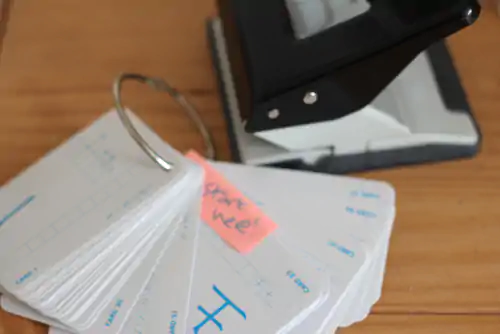
Many learners agree that the most effective way to acquire Japanese
is to combine the SRS with immersion.
After finishing learning
kana and kanji
you're going to continue to use Anki
in your study time to memorize vocabulary.
When memorizing new vocabulary, there are various card templates you can choose from.
Card templates are differentiated by what you put on the front of the card.
There are two major card templates that people tend to use: sentence cards and word cards.
Both have their variations depending on what other information they contain.
This article covers recognition cards.
Production cards are covered here.
Читать дальше...
7 декабря 2020 — Тацумото Рен
Learning kana is usually taken as one of the first steps to learn Japanese.
As you know,
Japanese has three different writing systems: hiragana, katakana, and kanji.
Hiragana and katakana are two phonetic writing systems,
together they are referred to as "kana".
Unlike kanji, kana characters don't represent unique meanings.
All you need to do is to learn how they sound.
Читать дальше...
9 августа 2024 — Тацумото Рен
Ankidrone Essentials is the generally recommended Anki deck for newcomers to Japanese
who want to quickly learn basic vocabulary.
Ankidrone Essentials is made to skyrocket your comprehension of native Japanese.
Since the first release in February 2020,
it has helped many people and received positive feedback.
Читать дальше...